
Predicting Drug-Induced Vascular Injury (DIVI)
Drug-induced vascular injury stalls drug development programs, while no qualified clinical biomarkers exist to follow up in patients, and preclinical work in animals lacks translatability. At MIMETAS we have developed an extensive array of human-relevant solutions to investigate DIVI. Choose between OrganoReady® assay-ready plates, an outsourced and standardized OrganoServices study, or fully customized projects.
MIMETAS’ Solutions for DIVI
Conventional Models Miss Vascular Liabilities.
MIMETAS’ Solutions Bring Them Into View.
DIVI is a recognized cause of compound termination, with a particular risk for vasoactive drugs, anticancer agents and biologics, like antibodies. It presents as vascular leakage, hemorrhage, inflammation, thrombosis or arterial lesions, and each of these can independently stall a program. MIMETAS’ platforms recreate a perfused, polarized, leak-tight human endothelial tube, so you can see how your compound affects the vessel wall under flow. Apical (lumen) and basolateral access let you dose from the blood side or the tissue side in the same assay.
Four Routes to Vascular Injury,
One Platform
DIVI is not a single event. Compounds can injure the endothelium directly, trigger immune activation, activate platelets, or disturb vascular tone. Each demands a different solution. MIMETAS lets you investigate each of them, with the model and access route that fits.
Direct endothelial injury
Get real-time barrier readouts alongside viability, from a 5-day acute assay up to 8-week chronic exposure, and uncover time-dependent toxicity that short or static assays miss, using a perfused, leak-tight vessel with apical and basolateral access.
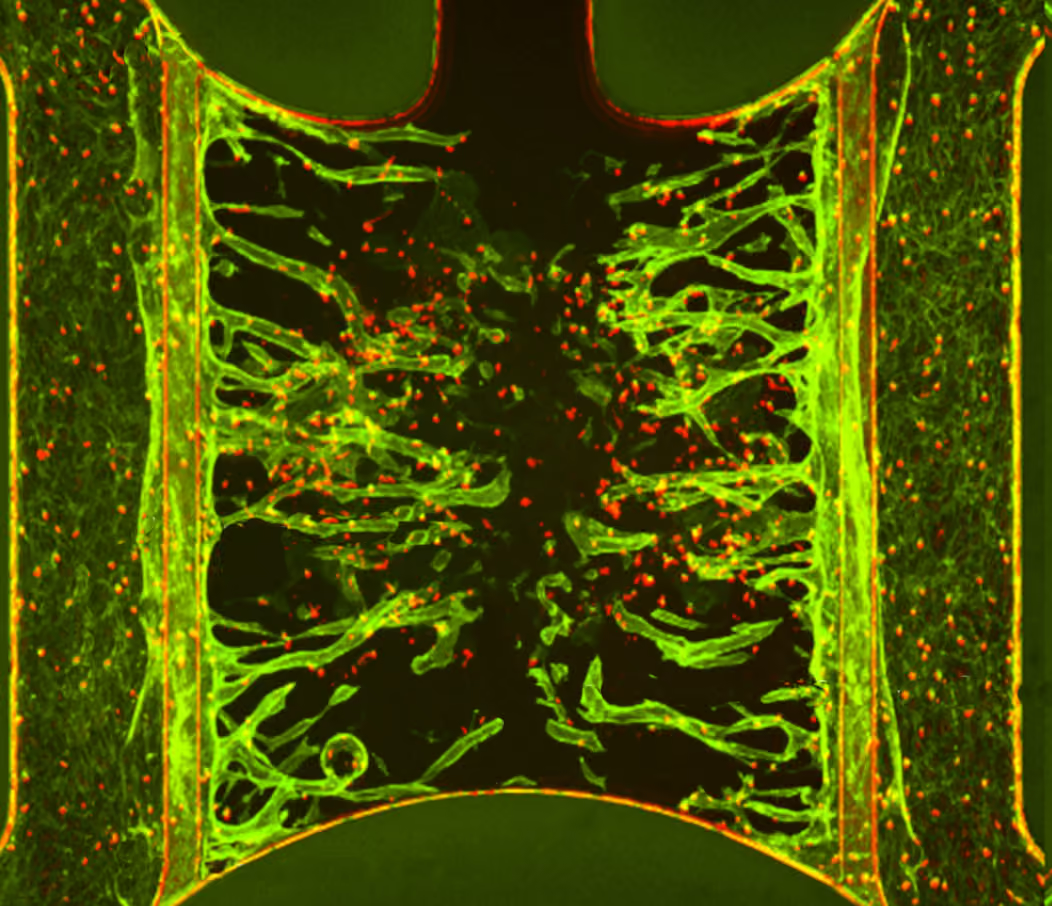
In the standardized acute assay, tubes are exposed from both the apical and basolateral side for 5 days with one re-dosing, and barrier integrity (OrganoTEER®) and viability (ATP) are reported as EC50 values.
For chronic exposure, the vascular bed in the OrganoPlate® Graft UniFlow, available via our OrganoAccess™ program, sustains unidirectional perfusion for up to 8 weeks.
Immune activation
Quantify immune cell adhesion directly and separate endothelial activation from toxicity in the same model, using an imageable tube where immune cells adhere under physiological flow.
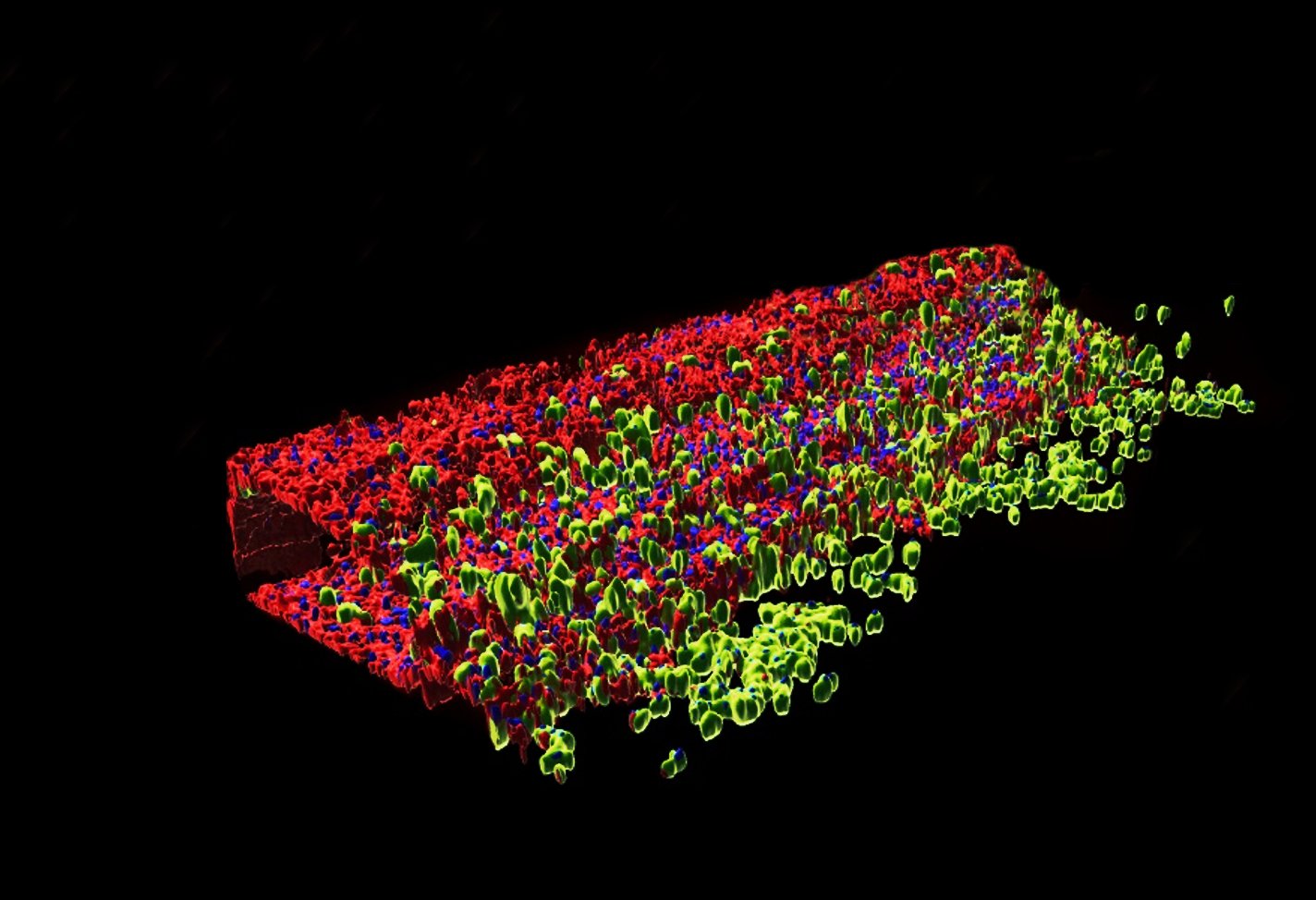
Stimulate the endothelium or immune cells
Perfuse labelled immune cells
Quantify adhesion under flow
Platelet activation
Assess platelet aggregation in its vascular context rather than in isolation, by perfusing platelets over a human endothelium.

In a platelet-perfused endothelium model developed by Takeda on the MIMETAS platform, oligonucleotide-induced thrombocytopenia was reproduced and quantified by CD41-positive aggregate formation in a dose-dependent manner (Harada et al., 2024).
Vasoactive pharmacology
Read out vasoconstriction and dilation directly, capturing vessel tone that endothelium-only models cannot show, using smooth muscle cells layered around the endothelium under unidirectional flow.
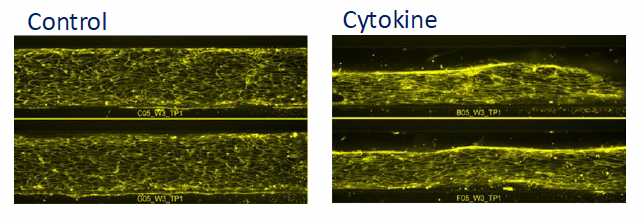
Cytokine-induced inflammation strongly induces vasoconstriction in a co-culture of human coronary artery endothelial cells (HCAEC) with smooth muscle cells (HCASMC) on the OrganoPlate® UniFlow.
Three Ways to
Get Started
Whether you want to run it yourself, hand it to us, or design something custom, we have you covered.
- Apical and basolateral access
- Easy TEER and medium sampling
- Robust monocyte perfusion
- From order to results in about 4 weeks, including a 14-day assay window.
Test induction of endothelial toxicity for any compound with out standardized services
- Fully functional HUVEC tubes
- 5-day compound exposure
- Robust quantification of viability and barrier integrity
- Co-cultures, including with multiple donors
- Healthy or diseased tissue
- Tissue-specific endothelia (HUVEC, HBMEC, HCAEC)
- Co-development of new clinically relevant readouts
Trusted Partner and Customer Voices
- >10 years of relationships with leading pharmaceutical companies
- >200 projects across all phases of drug development
Ready to Get Started?
Ship your compound and get a structured, human-relevant vascular safety report, typically within a week of assay completion.
Need more info? Contact us